Functional GI Disorders
Functional GI disorders are the most common problems that bring patients in to see their doctor. For example, constipation and IBS.
Understanding Functional GI Disorders
At our hospital, we know how frustrating it is to experience persistent digestive discomfort, especially when standard medical tests come back completely normal.
When our gastroenterologists talk about functional GI disorders, we mean conditions where the gastrointestinal tract looks perfectly healthy under a microscope or during a scan, but it is not moving, tracking, or functioning the way it should.
Your Symptoms are Real: A normal result on an upper endoscopy or colonoscopy is great news, but it doesn't mean your symptoms are in your head. It simply means the root cause is a breakdown in how your digestive system functions, rather than a structural disease.
Functional GI disorders are incredibly common and are the leading reason patients visit our specialized digestive health clinics.
Common Types of Functional GI Disorders
1. Chronic Constipation
While many people experience occasional difficulty passing stool, chronic or severe constipation can significantly impact your quality of life. When no underlying structural cause or disease is found, it is classified as a functional disorder.
Our care team frequently helps patients identify daily habits that inadvertently contribute to chronic constipation, such as:
Ignoring the Body's Signals: Frequently resisting or delaying the urge to have a bowel movement can desensitize your system over time. It is vital to use the restroom as soon as you feel the urge.
Laxative Overuse: Over-relying on certain over-the-counter laxatives can actually weaken your natural bowel muscles, making your digestive tract dependent on them to function.
2. Irritable Bowel Syndrome (IBS)
IBS is not a single disease, but rather a group of symptoms characterized by recurrent abdominal pain, cramping, bloating, and changes in your bowel movements (such as diarrhea, constipation, or a mix of both).
While the exact cause of IBS varies from person to person, the nerve pathways connecting your brain and gut are highly sensitive. Common triggers that can flare up IBS symptoms include:
Specific foods or dietary sensitivities
Side effects from certain medications
Emotional stress and anxiety
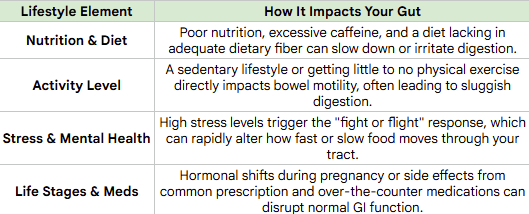
Lifestyle Factors and Your Digestive Health
Your digestive system is deeply connected to your everyday environment and daily routine. Often, functional GI symptoms can be successfully managed or improved by addressing key lifestyle areas: